Jan 27, 2026

A Comprehensive Guide to the New Human Capital Paradigm
The Indian education finance ecosystem is currently undergoing a systemic reconfiguration within a broader education-focused financial architecture in India, shifting from a traditional, input-focused public expenditure model toward a sophisticated, multi-stakeholder financial architecture. This transition is framed by the overarching national objective of achieving "Viksit Bharat" by 2047, a vision that necessitates the transformation of India’s demographic dividend into a high-value human capital asset.
As the Indian economy targets a $5 trillion valuation in the immediate term and an eventual $40 trillion by 2047, the financing of education has emerged as a critical macroeconomic lever. This ecosystem now integrates traditional budgetary allocations, expansive private equity and venture capital flows, a rapidly maturing corporate social responsibility (CSR) framework, and a digitally-native consumer credit market powered by world-leading Digital Public Infrastructure (DPI).
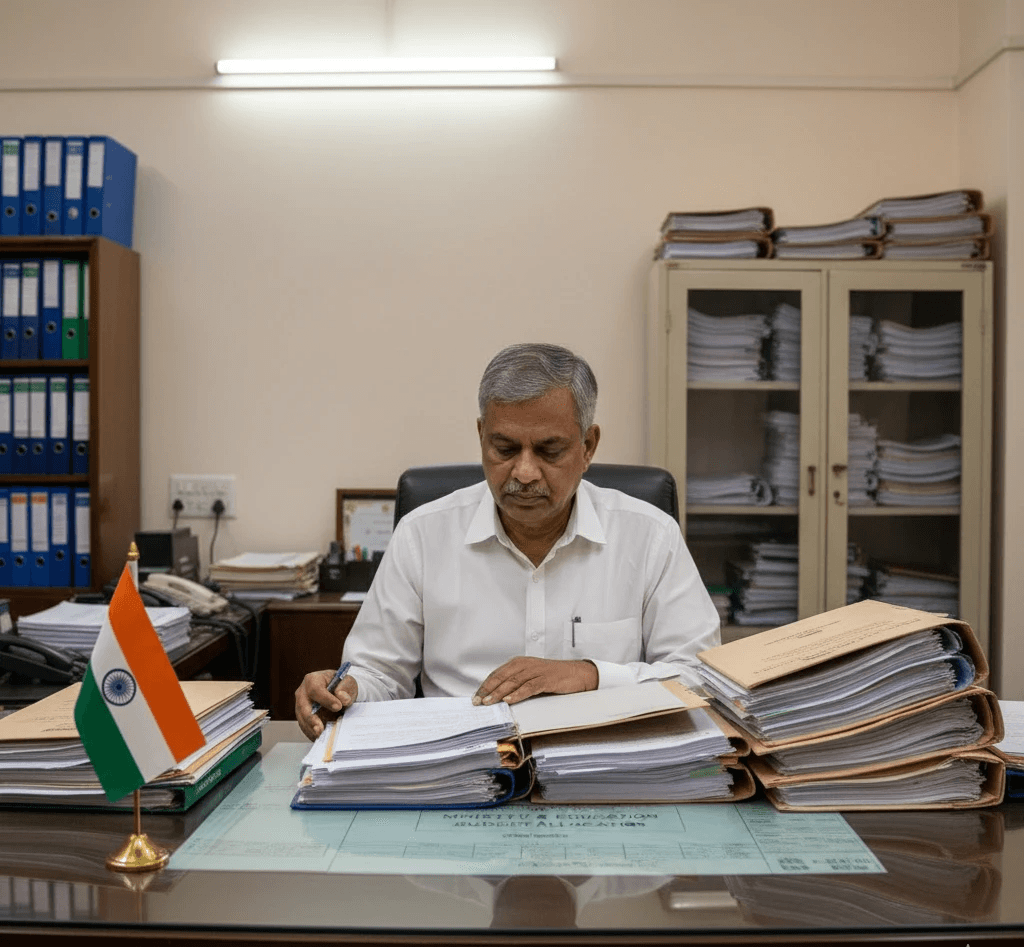
1. The Public Sector Financial Architecture: Budget 2025-26 and Beyond
The primary engine of education financing remains the state, though its role is evolving from a sole provider to a facilitator of diverse financing routes. The National Education Policy (NEP) 2020 serves as the foundational document for this shift, advocating for an increase in public expenditure on education to 6% of GDP. In the 2025-26 Union Budget, the Ministry of Education was allocated ₹1,28,650 crore, representing a 6.22% increase over the previous budget estimates.
Key Budgetary Allocations for School and Higher Education
The allocation is distributed across two key departments: the Department of School Education and Literacy, and the Department of Higher Education.
• Samagra Shiksha Abhiyan: This remains the flagship scheme for school education, receiving ₹41,250 crore in 2025-26.
• PM-POSHAN: Formerly the Mid-Day Meal scheme, it constitutes approximately 10% of the Ministry’s expenditure with an allocation of ₹12,500 crore.
• PM SHRI Schools: A significant qualitative shift in public financing, this initiative received ₹7,500 crore to upgrade 14,500 schools into "Green Schools" that link students with local entrepreneurial ecosystems.
• Higher Education Aid: Allocation for financial aid and scholarships in higher education reached ₹2,160 crore, an increase of 68% over revised estimates.
The budget also signals an intent to lead in technology-enabled learning, with a newly proposed ₹500-crore Centre of Excellence in Artificial Intelligence for Education.
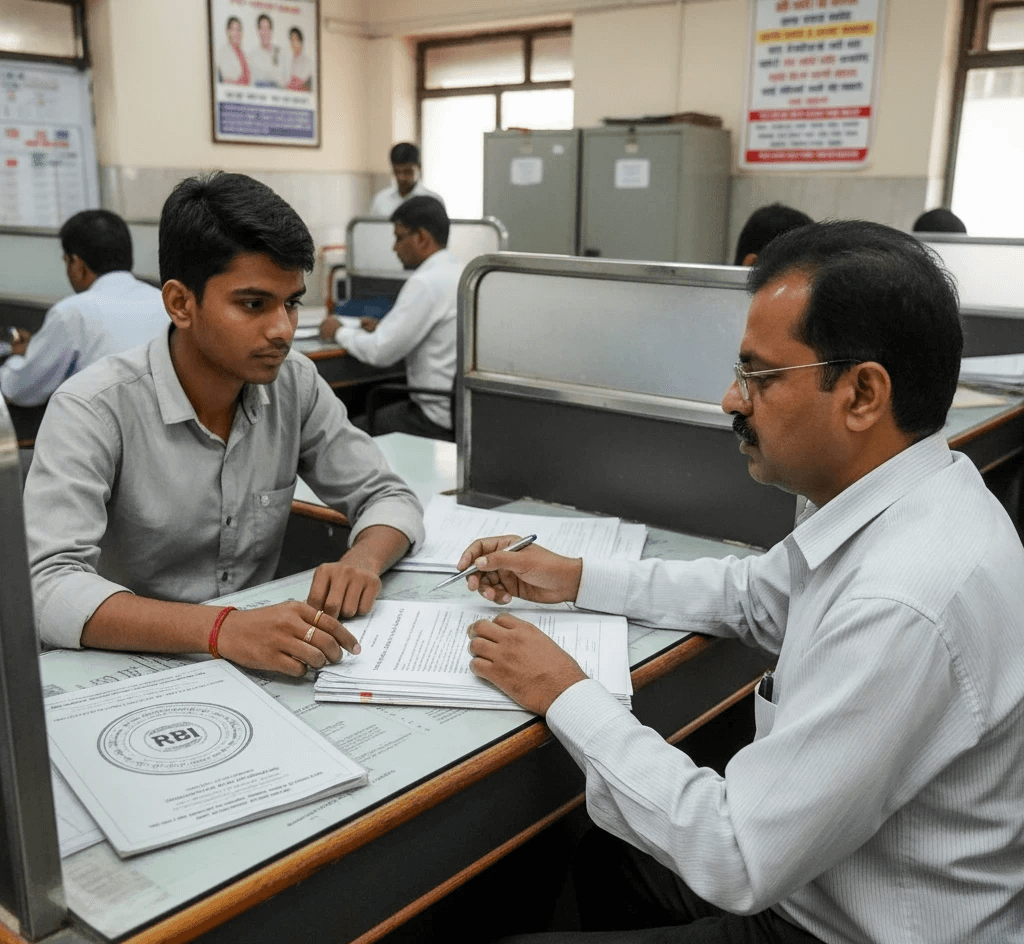
2. The Regulatory Landscape: RBI Guidelines and PM Vidyalaxmi
The commercial education loan market in India is governed by the Reserve Bank of India’s (RBI) Model Education Loan Scheme (MELS), which provides a standardized framework for interest rates and collateral requirements.
Collateral-Free Loan Thresholds
According to current RBI guidelines and government schemes, accessibility is prioritized through tiered security requirements:
• Up to ₹4 Lakhs: Entirely collateral-free and requires no guarantor.
• ₹4 Lakhs to ₹7.5 Lakhs: Requires a third-party guarantor but remains collateral-free.
• Above ₹7.5 Lakhs: Typically requires tangible collateral such as property or financial assets.
The PM-Vidyalaxmi Scheme
Approved in late 2024, the PM-Vidyalaxmi scheme aims to ensure that financial constraints do not prevent meritorious students from pursuing quality higher education. It facilitates collateral-free and guarantor-free loans for students admitted to the top Quality Higher Educational Institutions (QHEIs) in India. For families with an annual income up to ₹8 lakhs, the scheme provides a 3% interest subvention on loans up to ₹10 lakh.

3. The Shift to Private Credit: NBFCs and Specialized Lenders
While public sector banks (PSBs) remain major providers, Non-Banking Financial Companies (NBFCs) have captured a significant share of the high-ticket and overseas education market. NBFCs like HDFC Credila and Avanse have developed specialized underwriting models that factor in a student's "future earnings potential" and university rankings rather than just current family income.
Comparison: Banks vs. NBFCs in Education Finance
Feature | Public Sector Banks | Private NBFCs (e.g., Avanse, Propelld) |
|---|---|---|
Average Ticket Size | ₹5 - ₹6 Lakh | ₹20 - ₹30 Lakh |
Unsecured Limit | Up to ₹7.5 Lakh (MELS) | Up to ₹80 Lakh - ₹1.25 Cr |
Interest Rates | 8% - 11% (Floating) | 11% - 14% (Floating) |
Processing Time | Often lengthy bank process | Fast-track (as little as 3 days) |
Loan Coverage | May require margin money (5-15%) | Often 100% expense coverage |
NBFCs have experienced remarkable growth, with education loans being among their fastest-growing segments. For example, Avanse Financial Services saw its Assets Under Management (AUM) grow to ₹21,713 crore by September 2025, with 80.4% focused on overseas education.

4. Fintech Innovation: The FeeMonk Purpose-Built Model
Within this ecosystem, Fintech platforms like FeeMonk are bridging the gap between traditional banking and modern academic needs. FeeMonk is an education-focused fintech platform co-owned by an RBI-registered NBFC, Monk Capital Private Limited. This model strengthens access through student fee financing programs designed for Indian families.
Education Fee EMI vs. Traditional Education Loans
Unlike general consumer loan apps, FeeMonk focuses exclusively on the education ecosystem.
• Direct-to-Institute Payments: Approved amounts are paid directly to verified educational institutions, ensuring purpose-specific usage and transparency.
• Structured EMI Solutions: Students and parents can access structured EMI-based education payment solutions instead of paying large upfront amounts.
If you’re wondering whether schools legally allow monthly installments, read our complete guide on can you pay school fees monthly in India (2026 guide).
• Digital-First Experience: The entire process is powered by digitally managed education fee infrastructure systems, with instant eligibility checks.
• Impact and Trust: FeeMonk reports a Net Promoter Score (NPS) of 45, with 4 in 5 borrowers gaining first-time access to loans through the platform.
5. Specialized Financing: Teacher Loans and Vendor Solutions
The education finance ecosystem in India has matured to support not just the students (demand side) but also the educators and institutions (supply side).
Dedicated Teacher Loans
Recognizing that educators have unique income patterns, FeeMonk offers profession-specific loan solutions for educators. These are personal loans designed specifically for school teachers, private tutors, and college faculty, offering quick approvals and flexible EMIs without the need for collateral. Over 25,000 teachers have been served through this targeted approach.
Vendor Financing for Schools and Colleges
To support institutional growth, vendor financing models built for educational institutions allow vendors (such as EdTech providers or lab equipment suppliers) to receive 100% upfront invoice disbursement. This enables schools to manage their budgets through 3, 6, or 9-month EMI options while vendors avoid long 60-120 day payment cycles.

6. Private Capital Markets: PE/VC and Institutional Consolidation
While public and consumer finance address student needs, the infrastructure of education schools and EdTech is increasingly funded by Private Equity (PE) and Venture Capital (VC).
K-12 Consolidation and Premiumization
The Indian K-12 market, with 375 million students, is seeing a massive shift toward organized school chains. KKR’s acquisition of EuroKids (rebranded as Lighthouse Learning) marked a watershed moment for institutional confidence in the sector. Investors are betting on "premiumization," as the aspirational middle class is increasingly willing to pay higher tuition for international curricula like IB and IGCSE.
The Maturity of EdTech
After the funding "winter" of 2021-2023, the EdTech sector has pivoted from "growth-at-all-costs" to a "path-to-profitability" focus. The industry is projected to contribute 0.4% to national GDP by 2029. A key trend in 2025-26 is the integration of Generative AI into content delivery and personalized learning platforms.

7. The Digital Rails: DPI and the Future of Credit
India’s Digital Public Infrastructure (DPI) has emerged as a powerful enabler of inclusive growth in education finance.
• Aadhaar and e-KYC: Foundational identity layers have reduced the cost and time of student onboarding.
• Account Aggregator (AA): This framework has crossed 100 million consents, allowing students to share financial data securely with lenders for faster loan approvals.
• Unified Lending Interface (ULI): Positioned as the next major reform, ULI aims to enable frictionless delivery of credit to a billion Indians.
• APAAR (Automated Permanent Academic Account Registry): Often called "One Nation, One Student ID," this digital infrastructure simplifies the tracking of academic credits through the Academic Bank of Credits (ABC).

8. Financial Literacy and Tax Incentives
To ensure the sustainability of this ecosystem, the government and lenders are emphasizing financial literacy to reduce the risk of loan defaults. Furthermore, the Indian tax code provides a significant incentive for education financing under Section 80E of the Income Tax Act.
• Tax Deduction: The interest paid on an education loan is eligible for full deduction from taxable income for up to 8 years.
• Eligible Borrowers: This benefit can be claimed by individuals for their own education or for that of a spouse or children.
Conclusion: The Road to 2047
The Indian education finance ecosystem is at a pivotal junction, characterized by the maturity of its digital rails and the diversification of its capital sources. A remarkable achievement is the drastic reduction in Gross Non-Performing Assets (NPAs) in the education loan portfolios of Public Sector Banks, which fell from 7% in FY 2020-21 to just 2% in FY 2024-25.
As India marches toward its Viksit Bharat 2047 goals, the future of education finance will be defined by a shift toward outcomes-based financing (OBF), where capital is linked to "learning outcomes" and "employability" rather than mere enrollment. Organizations like FeeMonk are at the forefront of this evolution, ensuring that education remains accessible, affordable, and aligned with the aspirations of a youthful India.
FAQs
1. What is the PM Vidyalaxmi scheme?
It is a government initiative providing collateral-free and guarantor-free loans to students admitted to top-tier Indian institutions. Families with an annual income up to ₹8 lakhs may also receive a 3% interest subvention on loans up to ₹10 lakhs.
2. How much can I borrow without providing collateral?
Under RBI guidelines, education loans up to ₹4 lakhs require no collateral or guarantor. Loans between ₹4 lakhs and ₹7.5 lakhs typically require a third-party guarantor but still do not require tangible assets as security.
3. What makes NBFCs different from traditional banks for student loans?
NBFCs (Non-Banking Financial Companies) generally offer faster, digital-first processing and higher unsecured loan limits. Unlike banks that often focus on current assets, NBFCs typically evaluate a student’s future earning potential and university ranking.
4. Can I pay my tuition fees in monthly EMIs instead of one upfront cost?
Yes. Fintech platforms like FeeMonk specialize in converting school, college, and upskilling fees into structured EMI plans. These payments are disbursed directly to the educational institution to ensure transparency.
5. Are there any tax benefits for education loans in India?
Yes. Under Section 80E of the Income Tax Act, you can claim a full deduction on the interest paid on an education loan for up to 8 consecutive years. This benefit applies to loans taken for yourself, your spouse, or your children.
Header 1 | Header 2 |
|---|---|
Education Fee Financing Model Explained |